Garage Door Opener Types: Which One Is Right for You?
Introduction: The Engine Behind Your Garage Door
Your garage door opener is the hardest-working piece of equipment in your garage, cycling up and down an average of 1,500 times per year. It is the engine that makes your largest moving home feature operate at the push of a button, and choosing the right one has a direct impact on how quietly your door runs, how reliably it performs in extreme weather, and how well it integrates with modern smart-home technology. Yet most homeowners give very little thought to their opener until the day it fails. Understanding the differences between the four main types of garage door openers before you need a replacement puts you in a much stronger position to make a decision that fits your budget, your noise tolerance, and the specific demands of your door.
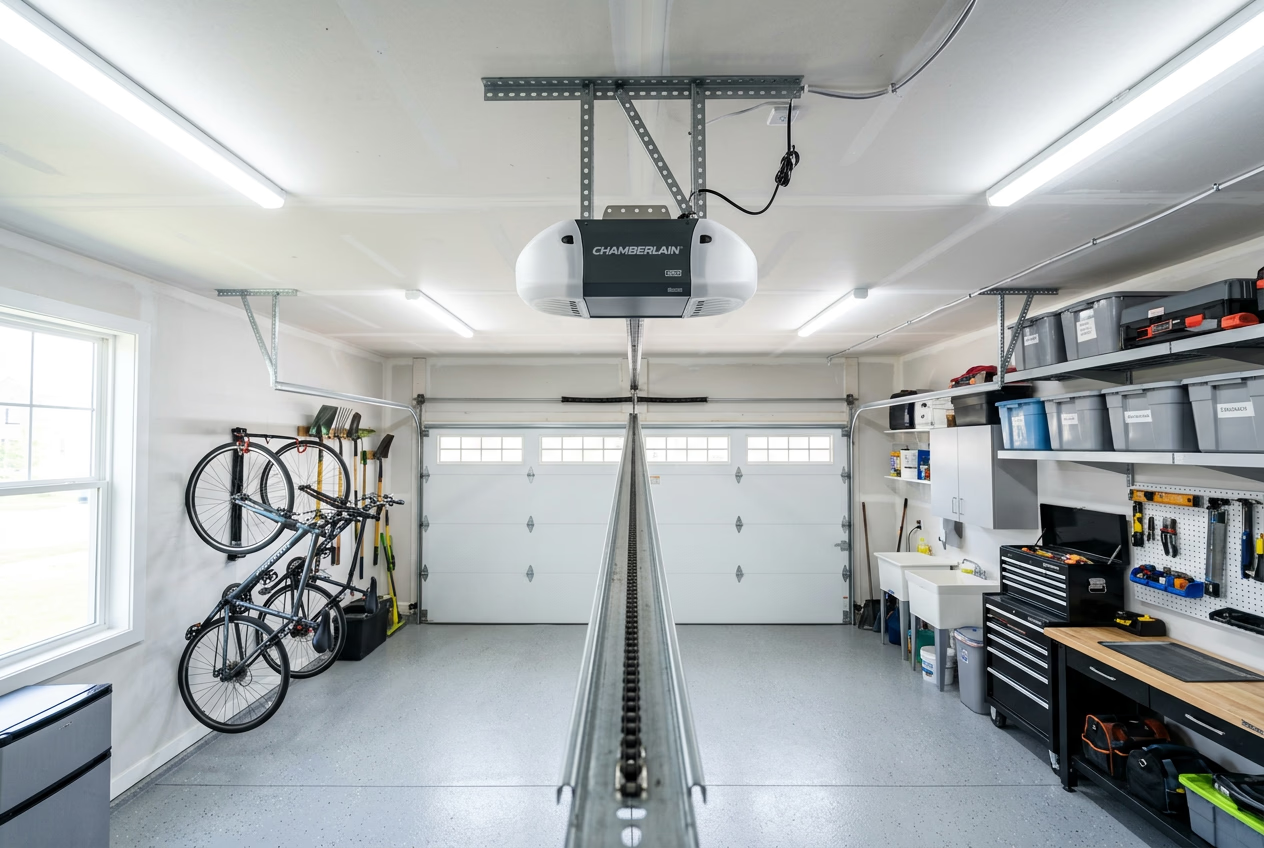
Whether you are building a new home, replacing an aging opener, or simply exploring an upgrade for quieter or smarter operation, this guide breaks down the four primary opener types, explains the growing world of Wi-Fi-connected smart openers, and helps you determine the right horsepower for your specific door. By the end, you will know exactly what to ask for when it is time to make your purchase.
Comparing the Four Main Opener Types
Every garage door opener on the market uses one of four drive mechanisms to move the door along its tracks. Each mechanism offers a distinct combination of price, noise level, maintenance requirements, and ideal use case. Chain drive openers use a metal chain, similar to a bicycle chain, to push or pull a trolley that moves the door. They are the most affordable option and extremely durable, but the metal-on-metal contact makes them the noisiest choice. Belt drive openers replace that chain with a reinforced rubber belt, dramatically reducing vibration and noise while maintaining excellent reliability. Screw drive openers use a threaded steel rod to move the trolley, offering a low-maintenance option with fewer moving parts, though they can be somewhat noisier than belt drives. Finally, direct drive or wall-mount openers eliminate the overhead rail entirely by mounting the motor on the wall beside the door and using a stationary chain embedded in the rail, making them the quietest and most space-efficient option available.
A side-by-side comparison of the four main garage door opener types across key decision factors including noise level, price range, ideal use case, and maintenance requirements.
Swipe to see more →
| Opener Type | Noise Level | Price Range | Best For | Maintenance |
|---|---|---|---|---|
| Chain Drive | Loud — metal-on-metal contact produces significant vibration | $150 – $300 | Detached garages, budget-conscious buyers, heavy doors | Moderate — chain requires periodic lubrication and tension adjustment |
| Belt Drive | Quiet — rubber belt absorbs vibration | $250 – $500 | Attached garages, bedrooms above garage, noise-sensitive homes | Low — belt is durable and rarely needs adjustment |
| Screw Drive | Moderate — fewer moving parts but some motor noise | $200 – $400 | Homeowners who want low maintenance with a mid-range budget | Low — no chain or belt to replace; occasional rod lubrication |
| Direct Drive / Wall-Mount | Very Quiet — motor is the only moving part | $350 – $600+ | Maximum quiet, limited ceiling space, modern builds | Very Low — minimal moving parts, long service life |
For most Atlantic County homeowners with an attached garage, a belt drive opener hits the sweet spot between affordability, quiet operation, and long-term reliability. However, if your garage is detached and noise is not a concern, a chain drive can save you a significant amount of money without sacrificing durability. Screw drive units are a solid middle ground for homeowners who prioritize low maintenance, while direct drive or wall-mount openers are the premium choice for those who want whisper-quiet operation and a cleaner-looking garage ceiling.
Smart Openers and Wi-Fi Connectivity
The garage door opener industry has undergone a major transformation in recent years with the introduction of built-in Wi-Fi connectivity and smart-home integration. Leading manufacturers like LiftMaster and Chamberlain now offer openers with built-in MyQ technology, which allows you to monitor and control your garage door from anywhere using a smartphone app. This means you can check whether you left the door open from your office, close it remotely while on vacation, or receive a real-time alert the moment the door is opened. For families with children, delivery drivers, or frequent guests, smart openers also offer temporary or scheduled access codes, so you never have to leave a key under the mat again.
When evaluating smart garage door openers, prioritize these features:
- Real-time open/close notifications — Receive instant push alerts on your phone whenever the door opens or closes, so you always know who is coming and going.
- Remote operation via smartphone app — Open or close your garage from anywhere with an internet connection using the MyQ, LiftMaster, or Chamberlain app.
- Scheduled auto-close — Set the door to automatically close at a specific time each night, eliminating the worry of forgetting to shut it before bed.
- Guest and delivery access — Grant temporary access to trusted visitors, pet sitters, or package delivery services without sharing your main code.
- Smart home integration — Look for compatibility with Amazon Alexa, Google Home, Apple HomeKit, or IFTTT for seamless voice control and automation routines.
- Battery backup with status monitoring — Smart openers with integrated battery backup continue to operate during power outages and report battery health through the app.
“Consumer Reports testing found that smart garage door controllers with real-time alerts and auto-close features significantly reduced the number of times garage doors were left open unintentionally, ranking MyQ-equipped LiftMaster and Chamberlain openers among the top performers for reliability and app responsiveness.”
Local South Jersey Experts
Need Help With Your Garage Door?
Our local South Jersey technicians are ready to help — same-day service available. Don't wait for a small problem to become a big one.
Choosing the Right Horsepower
Horsepower determines how much lifting force your opener can generate, and selecting the right amount is critical for both performance and longevity. An underpowered opener will strain to move your door, overheat, and burn out prematurely. An overpowered opener wastes money upfront without providing a meaningful benefit. The general rule is straightforward: a 1/2 HP motor is sufficient for a standard single-car garage door made of lightweight steel or aluminum. If you have a double-wide door, or a single door that is insulated and therefore heavier, step up to a 3/4 HP motor for reliable, effortless operation. For oversized carriage-style doors, solid wood doors, or any door that exceeds standard weight specifications, a 1 HP or higher motor ensures the opener can handle the load without strain even in extreme temperatures when lubricants thicken and components contract.
Keep in mind that horsepower ratings from different manufacturers are not always directly comparable, as motor efficiency and gear reduction ratios also play a role in actual lifting performance. A high-quality 1/2 HP opener from a reputable brand like LiftMaster may outperform a cheap 3/4 HP unit from an off-brand manufacturer. When in doubt, consult with a professional who can weigh your specific door and recommend the optimal motor size. This small step prevents the frustration of an opener that struggles on cold mornings or gives out after just a few years of service.
Professional Installation by Atlantic County Garage Doors
While it may be tempting to install a garage door opener yourself, professional installation ensures the job is done safely and correctly the first time. Opener installation involves high-voltage electrical wiring, precise alignment of the rail and trolley system, proper calibration of travel limits and force settings, and integration with your door's existing spring and cable system. Improper installation can lead to a door that reverses unexpectedly, an opener that overheats and fails prematurely, or in the worst case, a safety hazard for your family. Professional installation also preserves the manufacturer's warranty, which is often voided if the unit is not installed by a licensed technician.
At Atlantic County Garage Doors, our technicians are factory-trained and certified to install all major opener brands, including LiftMaster, Chamberlain, Genie, and Marantec. We handle everything from removing your old unit to programming your remotes and connecting the smart-home app on your phone. Every installation includes a full safety inspection of your existing door system, so we can identify and resolve any issues with springs, cables, or tracks before they cause problems with your new opener. Call us today at 609-663-9260 for a free estimate on opener installation, or stop by to see our showroom models in person. We proudly serve all of Atlantic County, Cape May County, and Ocean County.