Understanding Garage Door Springs: Torsion vs. Extension
Introduction: The Unsung Heroes of Your Garage Door
Of all the components that make up your garage door system, none is more critical — or more misunderstood — than the springs. Garage door springs are responsible for counterbalancing the immense weight of the door itself, which typically ranges from one hundred fifty to four hundred pounds depending on the size, material, and insulation. Without functional springs, your garage door would be nearly impossible to lift manually, and your electric opener would burn out trying to shoulder the full load alone. Springs do the heavy lifting — literally — storing mechanical energy when the door closes and releasing it to assist the door as it opens. They cycle thousands of times over their lifespan, enduring tremendous stress with every operation. There are two fundamental types of garage door springs used in residential applications: torsion springs and extension springs. Each type works differently, carries different advantages and trade-offs, and requires different considerations when it comes time for replacement.
In this article, we will explain exactly how torsion and extension springs work, compare their performance characteristics side by side, identify the warning signs that your springs are nearing the end of their life, and explain why spring replacement is one garage door task you should never attempt on your own. Whether you are a homeowner trying to understand a quote from a technician or simply want to know more about the system that protects your family every day, this guide will give you the knowledge you need.
Torsion Springs: How They Work
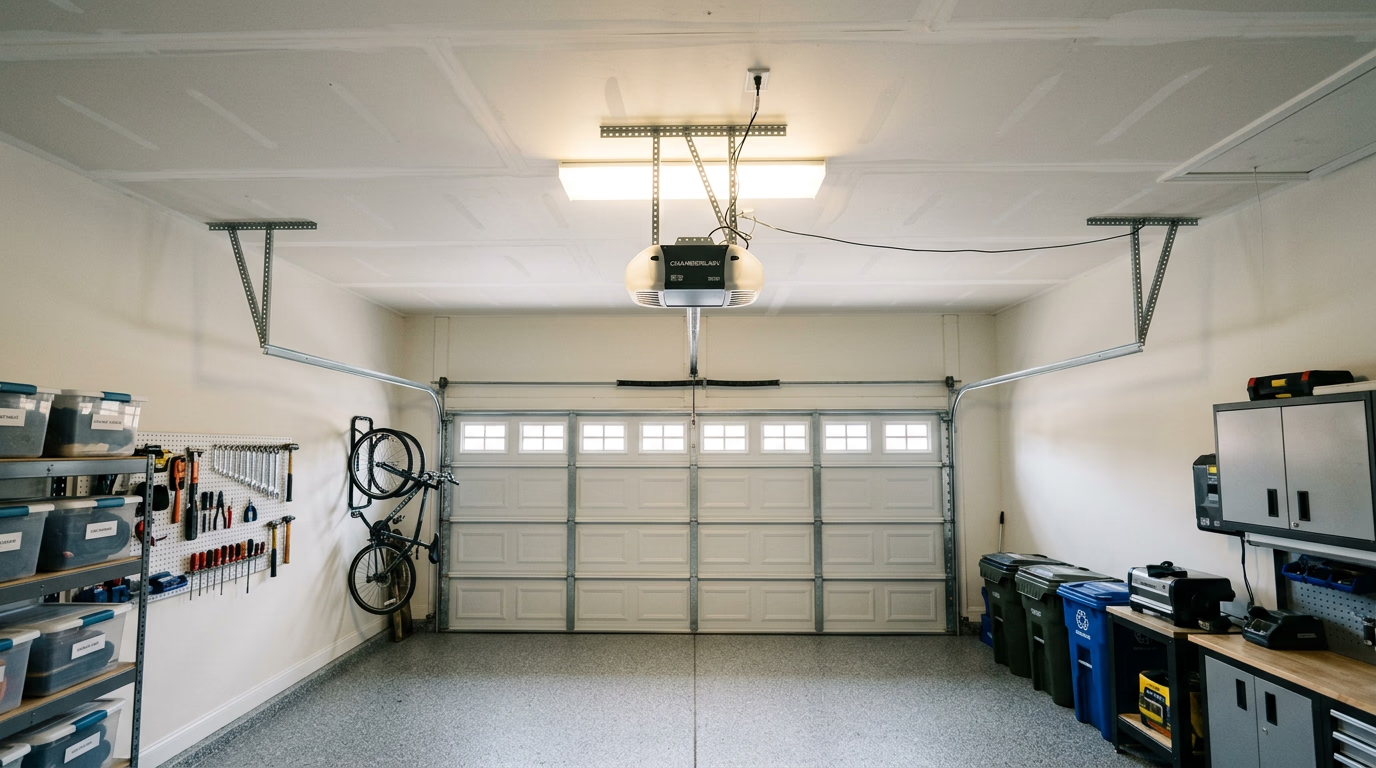
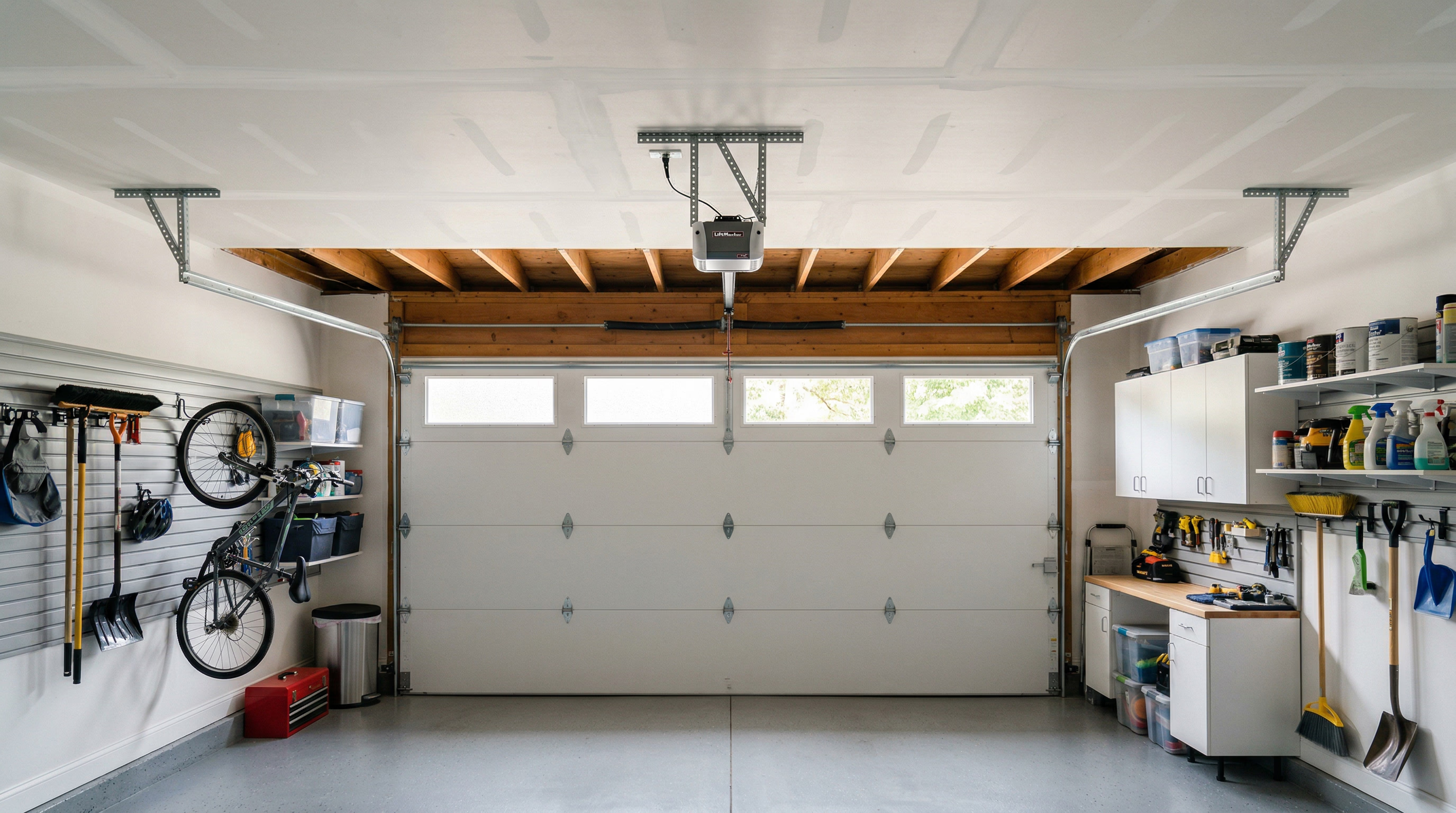
Torsion springs are mounted horizontally on a steel shaft directly above the garage door opening, typically on the inside of the garage. When the door closes, the cables connected to the bottom corners of the door wind the springs tighter, storing rotational energy — torque — in the coiled steel. When you open the door, either manually or with an opener, the springs unwind and release that stored energy, effectively lifting the door's weight so that the opener or your arms only need to provide a small fraction of the lifting force. A standard residential torsion spring is rated for ten thousand to twenty thousand cycles, with one cycle being one complete open-and-close operation. For a typical household that uses the garage door three to four times per day, this translates to roughly seven to fourteen years of service life. High-cycle springs rated for twenty-five thousand or even fifty thousand cycles are available for homeowners who want to extend the interval between replacements.
Pros and cons of torsion springs:
- Pro — Superior balance and control: Torsion springs provide smooth, even lifting force across the full travel of the door, resulting in quieter and more controlled operation compared to extension springs.
- Pro — Longer lifespan: Torsion springs typically outlast extension springs due to their design, which distributes stress more evenly across the coil. Standard torsion springs last 10,000-20,000 cycles, and high-cycle options extend that significantly.
- Pro — Safer failure mode: When a torsion spring breaks, the energy is contained on the shaft. The spring may shift or make a loud noise, but it does not fly across the garage the way a broken extension spring can without safety cables.
- Pro — Space efficient above the door: Because torsion springs are mounted on a shaft above the opening, they do not require the horizontal ceiling space that extension springs demand along the sides of the door.
- Con — Higher upfront cost: Torsion springs and their associated hardware typically cost more than extension springs, both for the parts and for the professional labor required for installation.
- Con — Professional installation required: The high tension involved in winding torsion springs makes DIY installation or replacement extremely dangerous. Specialized winding bars and training are mandatory.
Torsion springs are the preferred choice for most modern garage door installations due to their superior balance, smoother operation, and inherently safer design. They are standard on virtually all new double-car garage doors and are increasingly common on single-car doors as well. If your home currently uses extension springs and you are facing a replacement, upgrading to a torsion spring system is often possible and is well worth the investment for the improved performance and safety.
Extension Springs: How They Work
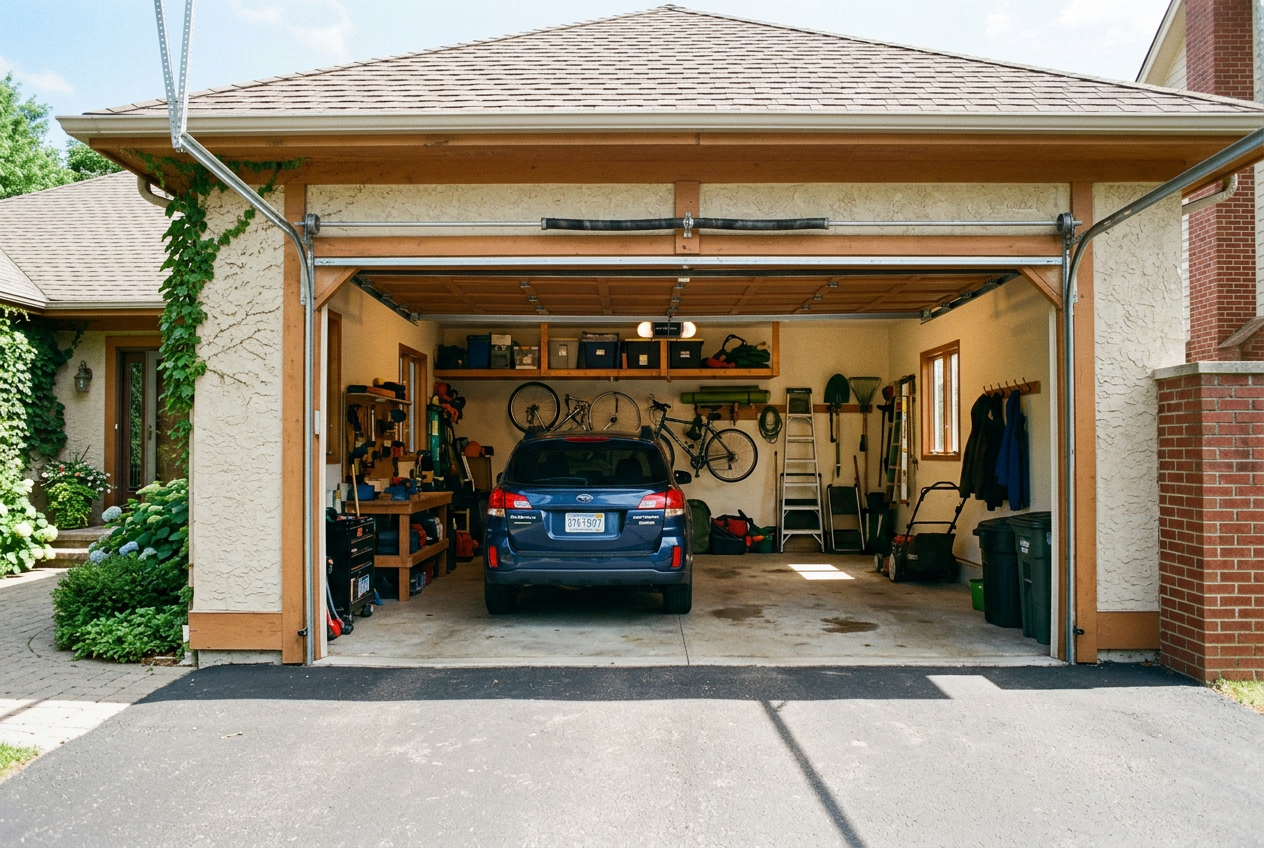
Extension springs operate on a fundamentally different principle than torsion springs. Instead of using torque on a rotating shaft, extension springs stretch and contract along their length. They are mounted on either side of the door, running parallel to the horizontal tracks, and are anchored at the rear of the track on one end and connected to the door's lifting cables on the other. When the door closes and its weight pulls down on the cables, the extension springs stretch, storing energy in the elongated coils. When the door opens, the springs contract back to their resting length, providing the lifting assistance that counterbalances the door's weight. Extension springs have been the standard in residential garage doors for decades and remain common on older installations and lighter single-car doors.
Pros and cons of extension springs:
- Pro — Lower upfront cost: Extension springs are generally less expensive than torsion springs, both in terms of parts and installation labor, making them the more budget-friendly option.
- Pro — Simpler replacement for experienced technicians: While still dangerous and not recommended for DIY, the replacement process for extension springs is somewhat less complex than for torsion springs.
- Pro — Widely available: Extension springs are stocked by virtually every hardware store and garage door supplier, making parts readily accessible.
- Con — Shorter lifespan: Extension springs typically last around 10,000 cycles, roughly half the lifespan of a comparable torsion spring, meaning more frequent replacements over the life of the door.
- Con — Higher safety risk if safety cables are missing: When an extension spring breaks without a safety cable running through its center, the broken spring can fly across the garage at high speed, causing serious injury or property damage. Safety cables are essential but are not always installed on older systems.
- Con — Less smooth operation: Extension springs can produce a slightly jerky motion at the beginning and end of the door's travel because the force they exert changes as they stretch and contract, unlike the more consistent torque of a torsion spring.
- Con — Requires more ceiling space: Extension springs need clear space along the horizontal tracks on both sides of the door, which can be a limitation in garages with low ceilings or side-mounted storage.
A side-by-side comparison of torsion and extension garage door springs across key performance and practical criteria.
Swipe to see more →
| Criteria | Torsion Springs | Extension Springs |
|---|---|---|
| Mounting Location | Horizontally on a shaft above the door opening | On both sides of the door along the horizontal tracks |
| How They Store Energy | Rotational torque (twisting) | Linear stretch (elongation) |
| Typical Lifespan | 10,000 - 20,000 cycles (7-14 years) | ~10,000 cycles (5-9 years) |
| Average Replacement Cost | $200 - $400 (pair, installed) | $150 - $300 (pair, installed) |
| Safety When Broken | Energy contained on shaft; safer failure mode | Can fly across garage if safety cables are not installed |
| Noise Level | Quieter, smoother operation | Can be noisier with more vibration |
| Space Required | Minimal — mounted above the opening | Requires clearance along both sides of the ceiling |
| Best Suited For | All door sizes; standard on modern doors | Lighter single-car doors; budget-conscious installations |
Local South Jersey Experts
Need Help With Your Garage Door?
Our local South Jersey technicians are ready to help — same-day service available. Don't wait for a small problem to become a big one.
Warning Signs Your Springs Are Failing
Garage door springs do not last forever, and recognizing the warning signs of impending failure can save you from the inconvenience of being trapped inside or outside your garage — or worse, from a dangerous sudden break. Springs degrade gradually over thousands of cycles, and the symptoms of a failing spring often develop weeks or even months before the spring actually snaps. Paying attention to how your door looks, sounds, and feels during normal operation is the best way to catch a problem early and schedule a controlled, professional replacement before an emergency occurs. Here are the most common warning signs that your garage door springs are nearing the end of their life.
“The International Door Association provides extensive resources for homeowners on garage door safety, including guidance on identifying worn components and understanding when professional service is required. The Association emphasizes that springs are among the most dangerous components in a garage door system and should only be serviced by trained, certified technicians.”
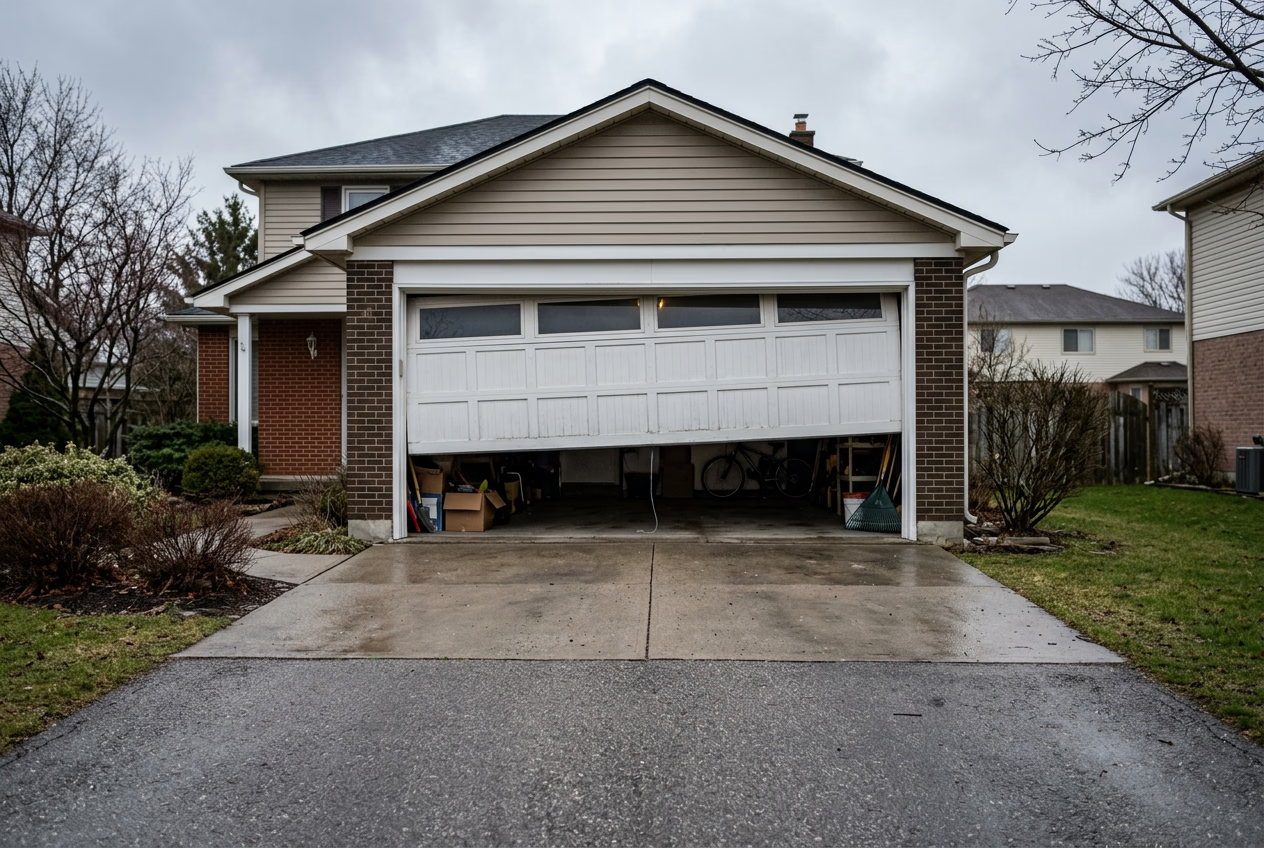
The most dramatic sign is a loud bang from the garage — often described as sounding like a gunshot or a car backfiring — which typically means a spring has already broken. If you hear this sound, do not attempt to operate the door until a professional has inspected it. Other warning signs are more subtle but equally important. If your door suddenly feels much heavier than usual when you try to lift it manually, the springs are losing their ability to counterbalance the weight. Visible gaps in the spring coils — where you can see daylight between coils that used to be tightly wound — indicate the spring has stretched and lost tension. A door that will not stay open when lifted to the halfway point is another telltale sign of spring fatigue. Uneven opening, where one side of the door rises faster than the other, suggests that one spring has weakened or broken while the other is still functional. And if your electric opener is straining, running louder than usual, or failing to fully open the door, it may be compensating for a spring that is no longer carrying its share of the load. If you observe any of these signs, do not attempt to diagnose or repair the springs yourself. Garage door springs are under extreme tension and can cause catastrophic injury if handled improperly. Contact a licensed technician immediately.
Professional Spring Replacement by Atlantic County Garage Doors
When your garage door springs fail, you need fast, reliable, and safe service from a team you can trust. Atlantic County Garage Doors specializes in same-day spring replacement for homeowners throughout South Jersey. Our trucks carry the most common torsion and extension spring sizes so that in most cases, we can complete the replacement in a single visit without waiting for parts to be ordered. Every spring replacement we perform includes a full system inspection — we check the cables, rollers, hinges, tracks, opener, and safety features to ensure that everything is functioning properly and that no other components are at risk of imminent failure. Our technicians are licensed, insured, and extensively trained in the safe handling of high-tension spring systems. We follow strict safety protocols on every job, and we stand behind our work with a comprehensive warranty on both parts and labor.
“The Door and Access Systems Manufacturers Association (DASMA) provides safety guidelines for homeowners emphasizing that garage door spring replacement should always be performed by trained professionals. DASMA notes that the high-tension forces involved in spring systems present serious risks of injury and recommends that homeowners never attempt to adjust, remove, or replace springs themselves.”
Whether you need a straightforward spring replacement, want to upgrade from extension springs to a torsion system, or are considering high-cycle springs for longer service life, Atlantic County Garage Doors has the expertise and inventory to get the job done right. We proudly serve Egg Harbor Township, Galloway, Hammonton, Absecon, Pleasantville, Somers Point, Margate, Ventnor, and all surrounding communities in Atlantic County. Do not wait for a broken spring to leave you stranded — if you have noticed any of the warning signs described in this article, call us today at 609-663-9260 to schedule a professional inspection and spring replacement. We offer transparent pricing, no hidden fees, and the peace of mind that comes from knowing your garage door is in the hands of trusted local professionals.