Garage Door Safety: What Every Atlantic County Homeowner Should Know
Introduction: The Hidden Dangers of Garage Doors
Your garage door is likely the largest and heaviest moving object in your home. A standard residential garage door weighs between 150 and 400 pounds, and when it is in motion, it generates tremendous force — more than enough to cause serious injury or even death. Despite this reality, many Atlantic County homeowners rarely think about the safety of their garage door until something goes wrong. Every year, thousands of Americans are treated in emergency rooms for injuries related to garage doors, including crushed fingers, broken bones, and head trauma. Children and pets are especially vulnerable, as they may not understand the dangers posed by a closing door or exposed mechanical components.
The good news is that modern garage doors are equipped with multiple safety features designed to prevent accidents — but only if those features are properly maintained and regularly tested. In this article, we will walk you through the essential safety features every garage door should have, explain the hidden dangers of components like torsion springs, provide practical tips for keeping children and pets safe, and help you recognize the warning signs that indicate it is time to call a professional. Whether your home is in Pleasantville, Hammonton, Somers Point, or anywhere else in Atlantic County, understanding garage door safety is not optional — it is essential.
Essential Safety Features Every Door Should Have
Since 1993, federal law has required all garage door openers sold in the United States to include specific safety mechanisms designed to prevent entrapment injuries. However, many older homes in Atlantic County still have garage door systems that predate these regulations, and even newer systems can fail if they are not properly maintained. Understanding what safety features your garage door should have — and verifying that they are functioning correctly — is the first step toward protecting your family.
Critical safety features that every residential garage door should include:
- Auto-Reverse Mechanism: When the closing door contacts an object or person, it must automatically reverse direction and open fully. This is the most fundamental safety feature and has been federally mandated since 1993.
- Photo-Eye Sensors: Mounted no higher than six inches from the floor on each side of the door, these infrared sensors create an invisible beam that, when broken, causes the door to immediately stop and reverse. They prevent the door from closing on children, pets, or objects.
- Manual Release Handle: A red-handled emergency release cord, typically hanging from the opener track, allows you to disconnect the door from the motorized opener and operate it manually during power outages or mechanical failures.
- Pinch-Resistant Panel Design: Modern garage door panels are engineered with joints that prevent fingers from being caught between sections as the door opens and closes, significantly reducing the risk of crushing injuries.
- Tamper-Resistant Brackets: The bottom brackets that connect the lifting cables to the door are under extreme tension. Modern doors use tamper-resistant brackets that discourage untrained individuals from attempting to adjust them.
- Wall-Mounted Control Button: Positioned at least five feet above the floor and within sight of the door, the wall button ensures that the person operating the door can see whether the path is clear before activation.
“The U.S. Consumer Product Safety Commission (CPSC) provides comprehensive guidance on automatic residential garage door operator safety. The CPSC emphasizes that all garage door openers manufactured after January 1, 1993, must comply with UL 325 safety standards, which require both an auto-reverse mechanism and a secondary entrapment protection system such as photo-eye sensors. The Commission strongly recommends that homeowners test these safety features monthly.”
Spring Safety: Why You Should Never DIY
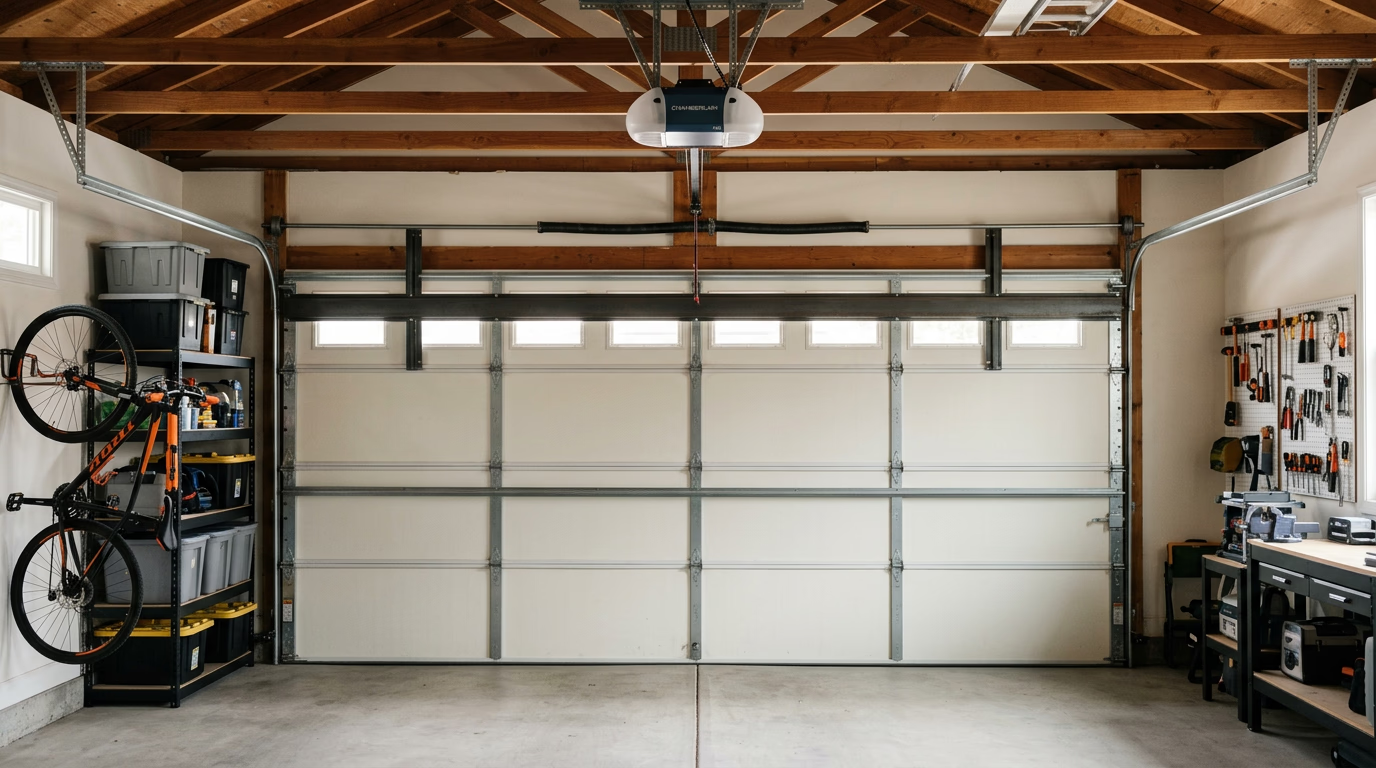
Of all the components in a garage door system, torsion springs are by far the most dangerous. These tightly wound steel springs are mounted on a metal shaft directly above the closed door, and they store an immense amount of mechanical energy — enough to lift the full weight of the door smoothly and in a controlled manner. A standard torsion spring for a two-car garage door can exert several hundred pounds of force. When these springs break — and they will eventually, as they have a finite lifespan typically measured in cycles — they release that stored energy instantaneously. The result can be catastrophic: broken springs have been known to send metal fragments flying across the garage at high velocity, shatter car windshields, punch holes through drywall, and cause severe lacerations or blunt-force injuries to anyone nearby.
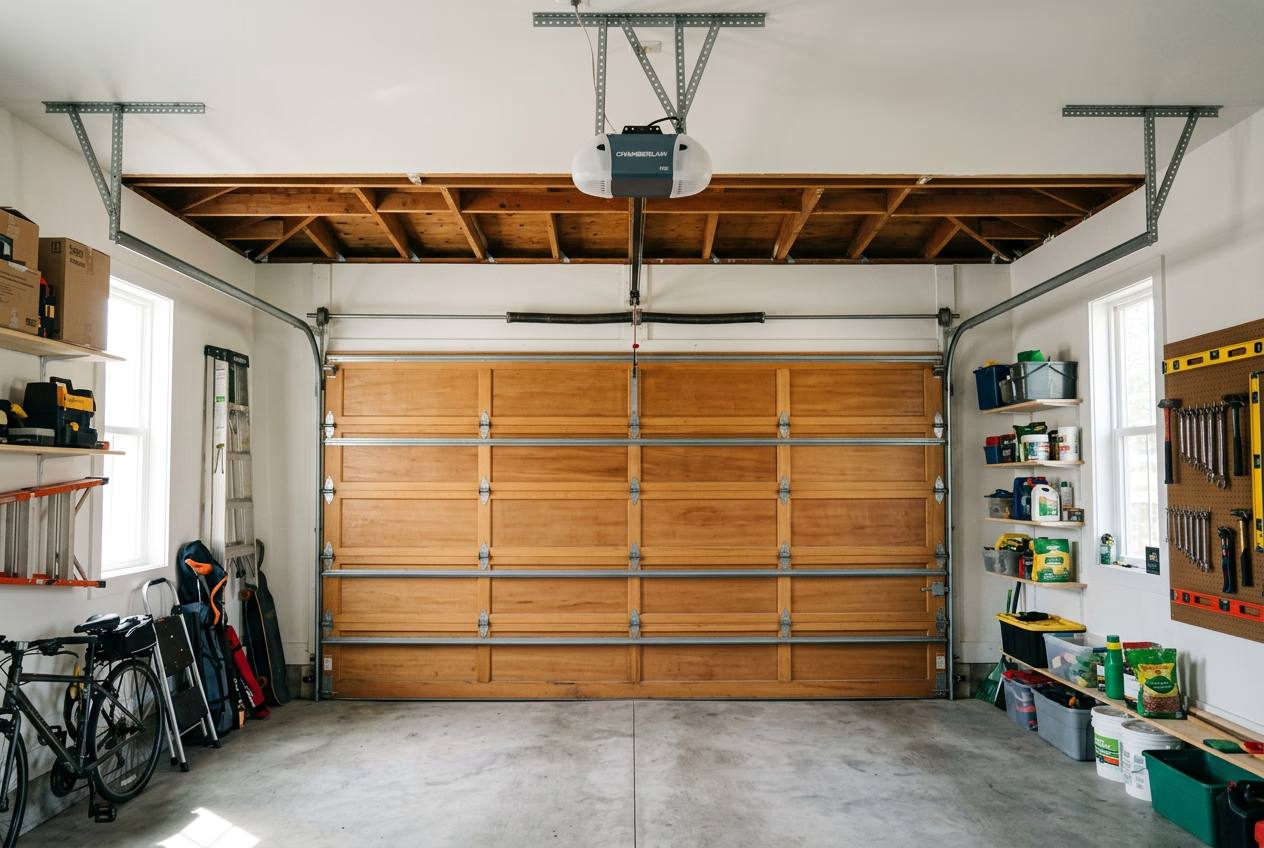
Despite the clear danger, many homeowners are tempted to replace or adjust torsion springs themselves after watching online tutorials. This is one of the most dangerous DIY tasks a homeowner can attempt. Professional garage door technicians use specialized tools, including winding bars, vise grips, and safety clamps, and they follow strict procedures developed over decades to manage the risks associated with spring work. Even extension springs, which are found on some older single-car garage doors and may appear less intimidating, are under significant tension and can cause serious injuries if improperly handled. The bottom line is straightforward: if your garage door springs are broken, worn, or making unusual noises, do not attempt to repair or replace them yourself. Call a trained professional like the team at Atlantic County Garage Doors to handle spring work safely and correctly.
Local South Jersey Experts
Need Help With Your Garage Door?
Our local South Jersey technicians are ready to help — same-day service available. Don't wait for a small problem to become a big one.
Keeping Children and Pets Safe
Children are naturally curious, and the garage door — with its buttons, remotes, and impressive movement — can be endlessly fascinating to them. Unfortunately, that fascination can lead to dangerous situations. Young children may try to race under a closing door, play with wall-mounted buttons, or treat garage door remotes as toys. Pets face similar risks, as they may wander into the door's path without warning. As a parent or pet owner in Atlantic County, establishing clear safety habits and performing regular equipment checks is one of the most important things you can do to protect your household.
A monthly safety checklist that Atlantic County homeowners should follow to ensure their garage door remains safe for children, pets, and all family members.
Swipe to see more →
| Safety Check Item | How to Test | Frequency |
|---|---|---|
| Photo-Eye Sensor Test | Place a cardboard box in the door's path and press close. The door should reverse immediately upon the box breaking the sensor beam. | Monthly |
| Auto-Reverse Force Test | Place a 2x4 board flat on the ground in the door's path. The door should reverse within two seconds of contacting the board. | Monthly |
| Manual Release Test | Pull the red emergency release handle and verify the door can be lifted and lowered manually without excessive force. | Monthly |
| Wall Button Height Check | Confirm the wall-mounted button is at least five feet above the floor, out of reach of young children. | Annually |
| Remote Storage Audit | Ensure all garage door remotes are stored out of children's reach — never left on low tables, in toy bins, or in unlocked cars. | Monthly |
| Visual Inspection of Springs and Cables | Look for signs of wear, fraying, rust, or gaps in the spring coils. Do not touch — visual only. | Monthly |
| Teach Children About Garage Door Safety | Remind children that the garage door is not a toy, they should never stand or play under a moving door, and they should never touch springs or cables. | Ongoing |
Taking five minutes each month to run through this safety checklist can mean the difference between a close call and a serious injury. If any of these tests reveal a problem — if the door does not reverse when it should, if the sensors appear misaligned, or if you notice visible damage to springs or cables — stop using the door immediately and contact a professional. Atlantic County Garage Doors offers comprehensive safety inspections for families across South Jersey, giving you confidence that every component of your garage door system is functioning as intended.
When to Call a Professional
While regular visual inspections and monthly safety tests are tasks every homeowner can and should perform, there are many garage door issues that require professional expertise and specialized equipment. Recognizing the boundary between safe homeowner maintenance and work that demands a trained technician is critical for your safety. You should call a professional immediately if you notice any of the following: a broken or visibly damaged torsion or extension spring, frayed or loose cables, the door falling rapidly when closing, the door failing to stay open when lifted manually, unusual grinding or scraping noises that persist after lubrication, visible gaps or bending in the door tracks, or any failure of the auto-reverse or photo-eye safety systems. These are not minor inconveniences — they are indicators of potentially dangerous conditions that can worsen rapidly.
“The Door and Access Systems Manufacturers Association (DASMA) provides extensive safety tips for homeowners, emphasizing that garage door springs, cables, bottom brackets, and other hardware attached to the springs are under high tension and can cause serious injury if improperly handled. DASMA recommends that only trained, qualified garage door technicians perform adjustments, repairs, or replacements of these components.”
Atlantic County Garage Doors is committed to keeping families throughout South Jersey safe. Our certified technicians perform thorough safety inspections that cover every component of your garage door system, from springs and cables to sensors and openers. We identify potential hazards before they become emergencies and provide honest, transparent recommendations for any necessary repairs or upgrades. If your garage door has not been professionally inspected in the past year, or if you have any concerns about its safety, do not wait for an accident to happen. Call Atlantic County Garage Doors today at 609-663-9260 to schedule a safety inspection. Your family's safety is always worth the call.