How to Prepare Your Garage Door for Hurricane Season in South Jersey
Introduction: Why Your Garage Door Is Your Home's Weak Point in a Storm
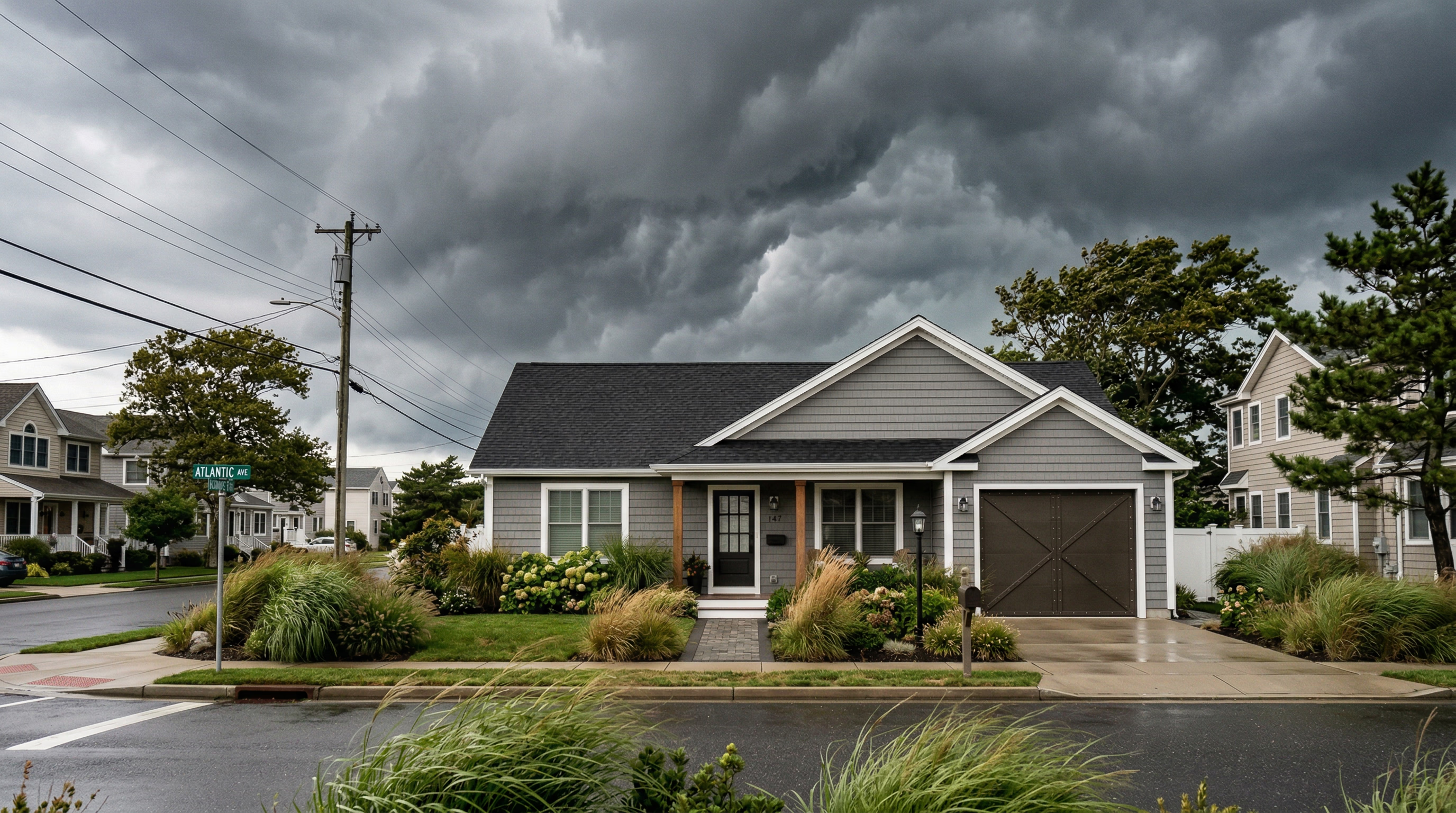
When a hurricane, tropical storm, or powerful nor'easter strikes South Jersey, your garage door is the single most vulnerable point of entry on your entire home. It is the largest opening in the building envelope, and if the door fails under wind pressure, the consequences can be catastrophic. Once wind enters through a breached garage door, it pressurizes the interior of the house, pushing upward on the roof structure and outward on the walls. This sudden change in pressure is what causes roofs to lift off, windows to blow out, and entire structures to suffer devastating damage that goes far beyond the garage itself. Atlantic County residents saw this firsthand during Superstorm Sandy in 2012, when countless homes along the coast lost their garage doors in the initial wind gusts, leading to cascading structural failures and flooding that destroyed interiors from the garage inward.
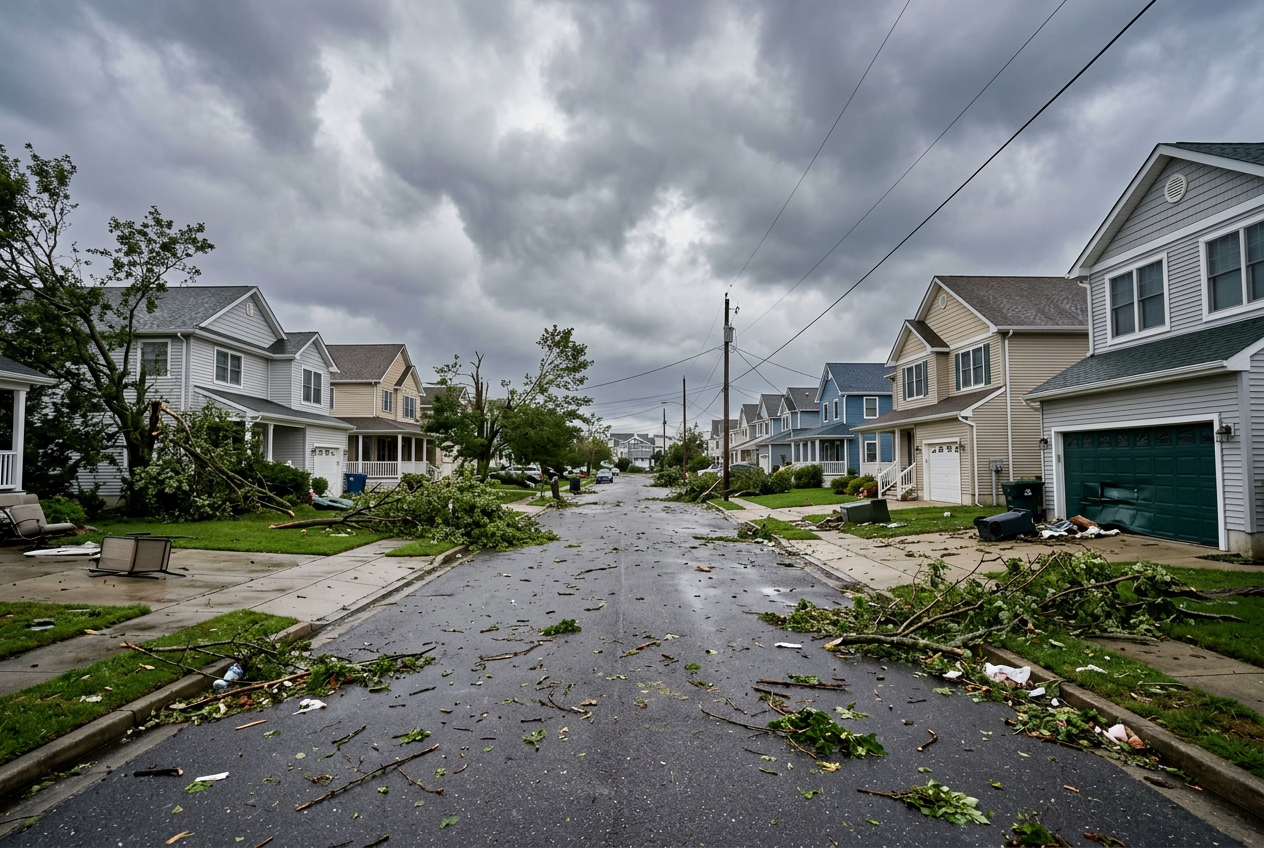
The good news is that garage door failure during a storm is largely preventable. Whether you invest in a wind-rated replacement door, retrofit your existing door with a bracing kit, or simply take the right precautions before each storm, there are concrete steps every homeowner can take to dramatically reduce their risk. This guide covers everything from understanding wind ratings and choosing the right door, to the hands-on preparation you should complete before every hurricane season, and what to do in the critical hours after a storm passes through.
Understanding Wind-Rated Garage Doors
Not all garage doors are built to withstand the same forces. Standard residential garage doors are designed for everyday use and moderate weather, but they are not engineered to resist the sustained wind speeds and pressure differentials produced by a tropical storm or hurricane. Wind-rated garage doors, by contrast, are tested and certified to withstand specific wind loads and impact forces. The most widely recognized standard comes from Miami-Dade County, Florida, which requires garage doors to pass both a large missile impact test and a cyclic pressure test simulating hurricane-force winds. While New Jersey does not mandate Miami-Dade compliance, choosing a door that meets or approaches these standards provides a significantly higher level of protection for coastal homes in Atlantic County, especially those within a few miles of the ocean or back bays.
“The Door and Access Systems Manufacturers Association (DASMA) publishes industry standards for wind load resistance in garage doors, including testing protocols that simulate hurricane-force conditions. Their standards serve as the benchmark for manufacturers producing wind-rated residential and commercial doors across the United States.”
When shopping for a wind-rated garage door, the key specification to look for is the wind load rating, expressed in pounds per square foot (psf). A standard non-rated door may handle 15 to 20 psf, while a wind-rated door designed for coastal areas will typically handle 30 psf or higher, with some Miami-Dade approved models rated for 50 psf or more. The rating you need depends on your home's location, the size of your garage opening, and your local building code requirements. Larger openings require stronger doors because the total wind force increases with surface area.
When evaluating a wind-rated garage door, look for these critical features:
- Wind load rating of 30 psf or higher — This is the minimum recommended for coastal Atlantic County properties; homes closer to the ocean should target 40 psf or above.
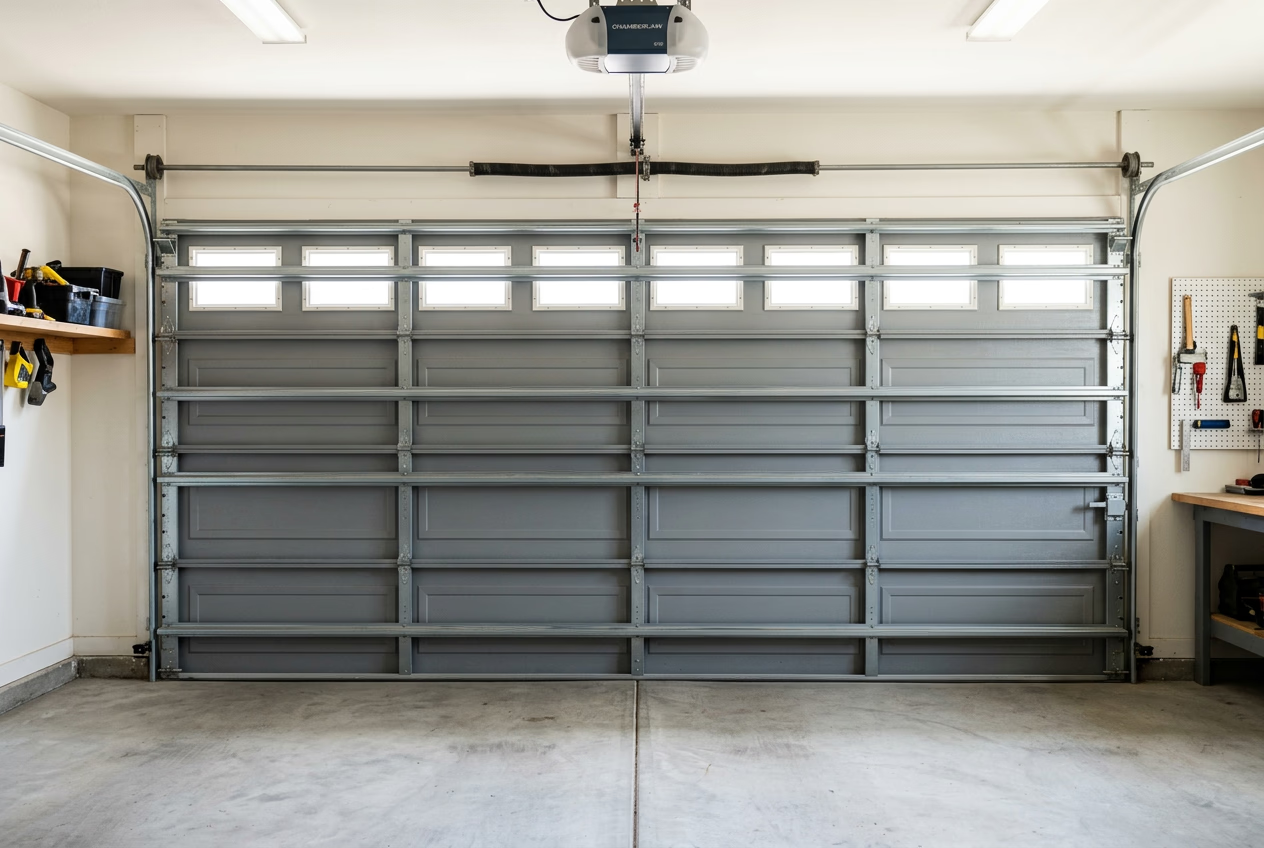
- Reinforced horizontal struts — Heavy-gauge steel struts bolted across the back of each panel add rigidity and distribute wind pressure evenly across the door surface.
- Impact-resistant construction — Doors tested for large missile impact (such as a 2x4 board traveling at 34 mph) offer protection against wind-borne debris.
- Heavy-duty track and bracket system — Wind-rated doors require stronger tracks, thicker mounting brackets, and additional fastening points to prevent the door from being pulled out of the opening.
- Reinforced bottom bracket and cable system — The bottom of the door bears the greatest wind load; reinforced brackets and heavier cables prevent failure at this critical point.
- Corrosion-resistant hardware — For coastal homes, ensure all springs, hinges, rollers, and fasteners are galvanized or stainless steel to withstand salt air exposure.
DIY Storm Preparation Steps
Even if you do not have a wind-rated garage door, there are meaningful steps you can take to reinforce your existing door and reduce your risk before a storm arrives. The most effective upgrade for a non-rated door is a horizontal bracing kit, which consists of steel struts that bolt across the back of each panel section. These kits are widely available, reasonably affordable, and can be installed by a handy homeowner or a professional in a few hours. Beyond bracing, storm preparation involves a systematic check of every component that could fail under pressure, along with securing the contents of your garage so they do not become projectiles if the door is breached.
A practical table of DIY storm preparation tasks with estimated costs and difficulty levels to help homeowners prioritize their efforts before hurricane season.
Swipe to see more →
| Preparation Task | Estimated Cost | Difficulty Level |
|---|---|---|
| Install a horizontal bracing kit on each panel section | $150 – $350 for a complete kit | Moderate — requires a drill, socket set, and 2-3 hours |
| Reinforce the vertical tracks with additional mounting brackets | $30 – $75 for brackets and lag bolts | Moderate — bolt additional brackets into wall studs every 12 inches |
| Replace worn weatherstripping and bottom seal | $20 – $60 for materials | Easy — slides into existing channel with no tools required |
| Inspect and tighten all existing hardware | Free — uses tools you already own | Easy — 30-minute walkthrough with a socket wrench |
| Secure loose items inside the garage (bikes, tools, shelving) | $0 – $50 for straps and hooks | Easy — strap down or remove items that could become projectiles |
| Test the opener's auto-reverse and manual release | Free | Easy — place an object under the door and confirm it reverses; pull the emergency release cord |
Local South Jersey Experts
Need Help With Your Garage Door?
Our local South Jersey technicians are ready to help — same-day service available. Don't wait for a small problem to become a big one.
What to Do After a Storm
The hours immediately after a storm passes are critical for your garage door and the safety of your family. Before you attempt to operate the door, take the time to perform a careful visual inspection from both the outside and inside. A door that appears intact from the street may have sustained hidden damage to its tracks, springs, cables, or panels that makes it unsafe to open. Forcing a damaged door can cause it to collapse, spring loose from its tracks, or drop suddenly when the compromised components give way. If you see any obvious signs of damage such as dented or bowed panels, gaps between sections, tracks that have pulled away from the wall, or cables that appear loose or frayed, do not attempt to open the door and call a professional immediately.
Complete this inspection checklist after every significant storm before operating your garage door:
- Visually inspect all panels from outside — Look for dents, cracks, bowing, or any panel that appears pushed inward or pulled outward from the frame.
- Check the tracks on both sides — Look for bends, kinks, or sections that have pulled away from the wall; even a slight track misalignment can cause the door to jam or derail.
- Examine springs and cables from a safe distance — Do not touch or attempt to adjust torsion springs; look for visible breaks, slack, or cables that have come off their drums.
- Look for water damage inside the garage — Check for standing water, waterline marks on walls, and moisture damage to stored items, drywall, and electrical outlets.
- Test the door manually before using the opener — Pull the emergency release cord and carefully attempt to lift the door a few inches by hand; if it feels excessively heavy or does not move smoothly, stop immediately.
- Document all damage with photos and video — Thorough documentation is essential for insurance claims; photograph every angle of the damage before any repairs are made.
“The New Jersey Office of Emergency Management recommends that homeowners inspect all entry points, including garage doors, before re-entering a home after a major storm event. Their mitigation planning documentation emphasizes that nor'easters and tropical systems pose ongoing structural risks to residential properties across the coastal counties of southern New Jersey.”
Emergency Storm Repair: Atlantic County Garage Doors Is Here 24/7
When a storm damages your garage door, time is of the essence. A compromised door leaves your home exposed to the elements, creates a security vulnerability, and can lead to secondary water damage that grows worse with every passing hour. At Atlantic County Garage Doors, we understand that storms do not wait for business hours, which is why we offer true 24/7 emergency repair service throughout Atlantic County, Cape May County, and Ocean County. Our crews are equipped to handle everything from temporary board-up and securing services to full door and opener replacement. We carry a comprehensive inventory of parts, panels, and complete door systems on our trucks so we can resolve most emergency repairs in a single visit, even in the immediate aftermath of a major weather event.
There are no after-hours fees, no storm surcharges, and no surprise bills. We believe that emergency service should be accessible to every homeowner, not just those who can afford a premium for after-hours work. We also work directly with your insurance company and provide the detailed documentation needed to support your claim. Do not leave your home vulnerable after a storm. Call Atlantic County Garage Doors at 609-663-9260 for immediate emergency repair service, day or night. We are your neighbors, and we are here to help you get back to normal as quickly as possible.